Iran protests FIFA ban on women's team


Iran is protesting a decision by the ruling football body FIFA to deny its women’s football team playing a 2012 Olympics qualifier in Jordan because of the players’ Islamic outfits, state media reported Sunday.

FIFA cancelled Friday’s game in Amman and declared Jordan 3-0 winners after the Iranian authorities refused their players to remove their headscarves and track suits.
Women in Iran are obliged to respect the hijab — Islamic dress code — and wear a long gown and scarf to conceal body contours and hair in public.
Iranian sportswomen, including the football team, have to keep the hijab in international competition, too.
Iranian Football Federation head Ali Kafshian told state television that FIFA had been informed about the outfits of the Iranian women’s team.
He named the FIFA ban and declaring the game in favour of Jordan as questionable.
Kafashian said that Iran has appealed the FIFA decision and would also file an official complaint against the football body.
Iran reportedly had the same problem last year at the Youth Olympic Games in Singapore.
Iran’s national women’s football team was founded in 2005 and was runner-up at Asian tournaments in Jordan in 2005 and 2007.
Iran has a large number of women interested in football, but they are not allowed to enter football stadiums despite approval by President Mahmoud Ahmadinejad.
Clergy circles and local football officials believe that the male-dominated atmosphere in football stadiums, and vulgar language used by male fans, were not appropriate for women.

Kissinger ponders FIFA anti-corruption role


LONDON, United Kingdom — Henry Kissinger is mulling over an offer from FIFA president Sepp Blatter to help clean up world football's governing body but said he needed more details before committing himself.
A lifelong football fan, the Vietnam War-era US secretary of state and national security adviser has been asked by Blatter to take part in a new group looking at ways to reform FIFA following months of corruption allegations.
"Yes, he's invited me, but he has not been specific except to say he wants to create a group of wise men to deal with some of the issues that have arisen," Kissinger, 88, told BBC Radio here on Sunday.
"I am an avid football fan and have been all my life. I watch as many games as I can.
"If it can help the sport I would be willing to participate but I have to know who the other participants are and what the terms of reference are before I make a final commitment."
Blatter was re-elected unopposed as FIFA president on Wednesday after his lone challenger, Qatar's Mohamed Bin Hammam, withdrew amidst bribery allegations that led to him being suspended by the ethics committee from involvement in the governing body.
Kissinger, asked for his view on Blatter's election, replied: "I shouldn't comment on any of these details because if I should join this group then maybe it's among the issues that is going to be there."
England's Football Association, supported by its Scottish counterpart, tried to get Blatter's election postponed on the grounds he would not have a full mandate so long as no other candidates were standing.
But its call was overwhelmingly rejected, with FIFA members voting by 172 votes to 17 against the FA's proposal.
Kissinger voiced an "understanding" for the British position but, when asked whether if the election should have been postponed, said: "I haven't followed it that closely.
"My general view is that FIFA should be conducted as transparently and as democratically as is necessary to win public support."
Blatter, a 75-year-old Swiss who has been in his current post for 13 years, has faced widespread calls for reform of FIFA following graft allegations surrounding the bidding for the 2018 and 2022 World Cups, awarded to Russia and Qatar respectively.
Kissinger, who served as secretary of state under presidents Richard Nixon and Gerald Ford from 1973-77, worked on US Soccer's failed bid to stage the 2018 or 2022 World Cups.
He previously helped bring the 1994 World Cup to the United States.

FIFA rejects UAE's bid to relax footballer residency rule


FIFA has rejected the UAE’s attempt to speed up foreign-born footballers’ ability to change allegiance after just three years residency in a foreign country.
At present, foreign-born footballers over the age of 18 years old are allowed to switch their allegiance after five years residency in a country.
The UAE had sought to relax the rule and have the residency period reduced to three years. The  move, UAE claimed would help smaller countries with large expatriate populations.
However, the motion only garnered support from 42 out of 153 FIFA members who voted at the FIFA Congress on Wednesday in Zurich.
The UAE delegation said the relaxing of the allegiance rules would have helped smaller countries compete at the top level of the game.
UAE football president Mohamed Al Rumaithi had argued change was good for countries trying to qualify for the World Cup.
"Especially for countries which have a small population," UAE football president Mohamed Al Rumaithi told the AFP news agency. "Along with local talents, we have many expatriate players."
The move comes just three years after FIFA increased the residency rule from two years to five years, with some delegates claiming the relaxing of the rule would open the door for richer nations to import skilled players from overseas with offers of citizenship.
The FIFA Congress was dogged by the ongoing issue of bribery and corruption and Sepp Blatter, who was relected president with 92 percent support, said the world soccer body faces danger and is “unstable” as it battles to combat the scandal.
Blatter, speaking at the start of FIFA’s congress in Zurich, was the sole candidate in the presidential election after Qatar’s Mohamed bin Hammam withdrew. Bin Hammam and fellow executive committee member Jack Warner were suspended as part of a corruption probe and deny wrongdoing. English and Scottish soccer bodies said the vote should be postponed.
UAE FOOTBALL: The UAE had sought to relax the rule and have the residency period reduced to three years (Getty Images)
“I thought that we were living in a world of fair play, mutual respect and discipline, and I must say this is not the case any longer,” Blatter, 75, said as he opened the congress. “It’s no longer the case because our pyramid of FIFA is suddenly unstable on its basis and there’s a danger.”
The scandal has roiled the sport and increased pressure on FIFA, which generates $4bn from its World Cup, to reform. Jacques Rogge, president of the International Olympic Committee, said his organisation had gone through similar problems. He said he spoke to delegates in Zurich as a “true lover of football.”
Bin Hammam, the Qatari head of soccer in Asia, withdrew his candidacy for the presidency amid accusations he tried to bribe Caribbean officials with $40,000 each in cash to vote for him.

FIFA's follies and soccer in the United States

FIFA's follies and soccer in the United States
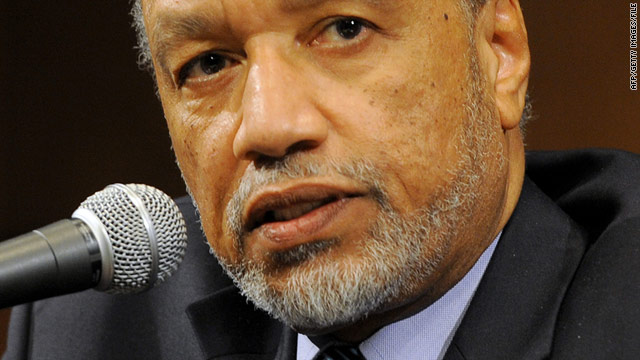
Mohamed Bin Hammam was one of two high-ranking FIFA members suspended Sunday over allegations of corruption.
It was less than a year ago when the United States made it to the knockout stage of the World Cup in South Africa, giving soccer some new American fans along the way.
Now, two high-ranking members of the sport's world governing body have been suspended amid allegations of corruption. The uproar may be giving some of those new soccer fans a crash course in the role that FIFA plays in the sport, and it may leave them wondering what the corruption allegations might mean for soccer in America and around the globe.
"FIFA likes to say that it has more members than the United Nations - and it does," said Sports Illustrated writer Grant Wahl. "Their members include 208 nations around the world."
It also earned more than $4 billion last year, more than the gross domestic product of some of its member nations.
FIFA is the top of the pyramid of the organization of the sport worldwide. And like the U.N., the organization is full of politics and has the occasional scandal. In the latest scandal, high-ranking FIFA officials Jack Warner and Mohamed Bin Hammam - a candidate for FIFA's presidency - were accused of offering bribes in return for votes for Bin Hammam. Both were suspended over the weekend, and the only remaining presidential candidate, incumbent Sepp Blatter, was re-elected on Wednesday.
Before that, some FIFA members allegedly sought bribes for a different kind of vote - the December decisions on the hosts for the 2018 and 2022 World Cups. Two members have denied claims that they took money to vote for Qatar, which was awarded the 2022 event. That vote was of particular interest for the United States, which was vying to host the 2022 edition.
What do these allegations mean for soccer fans in the United States? Do they care? CNN Radio's Steve Kastenbaum looked for the answers. Click the audio player to hear Kastenbaum's story:

Fifa Asks Kissinger To Stamp Out 'Corruption'


After being re-elected to the Fifa presidency, Sepp Blatter is turning to a former US Secretary of State to help investigate problems within the governing body.

Sepp Blatter
Sepp Blatter was the only candidate in the Fifa election
Blatter has called upon Henry Kissinger to be on a 'Solution Committee' to advise on transparency and corporate governance.
The 88-year-old, who worked under presidents Richard Nixon and Gerald Ford, is a keen football fan and worked on the failed US bid to host the 2022 World Cup.
Blatter has also said he wants to appoint Dutch Johan Cruyff to the same committee - which will have the power to investigate and suggest solutions as Fifa tries to recover from a number of bribery allegations.
Henry Kissinger
Mr Kissinger is an avid football fan
Mr Kissinger has proved a controversial figure - since leaving office efforts have been made by France, Chile and Argentina to question him on his role regarding the disappearance of numerous citizens of the US and other nations.
Meanwhile Britain's new Fifa vice-president has said the Football Association needs to "build bridges" following the fall-out from its failed attempt to force a postponement of the Fifa presidential election.
The FA motion to delay the election was crushed in spite of a series of allegations against Fifa executive committee members coming to light in recent weeks.
Jim Boyce, the former president of the Irish Football Association, claims there is a perception within certain Fifacircles that the FA is arrogant and says he is happy to help improve relations between the English association and the game's governing body.
He told the BBC: "England in my opinion needs to build bridges both within Uefa and Fifa. I can assure you that I will do all in my power - if asked - to help the English FA.
David Bernstein
English FA boss David Bernstein called for an election delay
"(The FA) need to get good people there, they need to get people who are highly respected throughout Europe and the world and there are a lot of very good people in England who could probably do those jobs.
"They need to build back confidence again. England as a football nation are undoubtedly one of the best nations in the world, there's no doubt about that, but sometimes some people feel that there is a little bit of arrogance there - I'm just being honest.
"Apparently there was a meeting before (the postponement vote) of the European countries. England have the right to do what they did today. I'm not criticising them for doing that, they felt they wanted to do something, they stood up and they did it.
Prince William and David Beckham in Zurich
Prince William and David Beckham support England's FA
"But the amazing thing appeared to be that (FA chairman) David Bernstein was the only person on that stage who tried to get the vote stopped.
"I'd have thought some other people would have gone up if they felt the same way and backed the FA, but nobody did."
Instead, 172 associations voted against the FA's move, and Mr Bernstein and the FA came in for stinging criticism from Fifa's senior vice-president Julio Grondona among others.
Mr Grondona criticised the English FA and the English media for their attacks on the Fifa family, and Mr Boyce believes Mr Blatter has garnered a great deal of support across the world game.
"Fifa has come in for a lot of criticism, some of it is probably justified," Mr Boyce said.
"But if you look it spent $794m (£485m) helping developing countries, looking after under-privileged people and they put a lot of money back into football.
"At Congress there were 186 votes for Sepp Blatter to still be the president of Fifa. Fifa has done an awful lot of good for the world game, but there are certain individuals who obviously have given Fifa a bad name."
Speaking on his return from Zurich the English FA chief said the association was not engaged in a "campaign" against Fifa.
Mr Bernstein said: "We'll keep at it. We've got to work with Fifa, not against them."

McDonald's joins Coca-Cola and Visa in calling for Fifa change


McDonald’s has become the latest corporate sponsor of Fifa to urge the embattled football organisation to change.


Controversy has centred on the successful Qatari bid for the 2022 World Cup which was awarded to the desert kingdom eariler this year. Photo: AFP/Getty

The fast food company has joined the likes of Coca-Cola, Visa, Adidas and Emirates, the airline operator, in expressing concern following the emergence of corruption allegations at the Swiss-based soccer administrator.
Its president, Sepp Blatter, has come in for criticism from the likes of the English Football Association which this week tried to delay the presidential elections which Blatter won unopposed.
A statement from McDonald's said: “We continue to encourage FIFA and its leadership to reform and strengthen the game of football around the world and expect that the current issues will be resolved in the best interest of the game."
Controversy has centred on the successful Qatari bid for the 2022 World Cup which was awarded to the desert kingdom eariler this year. Blatter has suggested that future World Cup bids could be decided by a vote of its 208 member congress and has hinted at changes to the organisation's corporate governance.
However, corporate sponsors, which generate a large part of Fifa's annual income, which stood at $1.3bn (£795m) last year, are understood to be keen to see a significant shake-up in the way Fifa is organised to improve transparancy and disclosure. They remain worried that the corruption allegations swirling around Fifa will damage the game's global image which represents a key part of sponsors' marketing spend.

Incontinent Blatter


His tenure has been plagued by allegations of scandal. So why is FIFA’s president sure to win reelection?

soccer-ov11-hsmallAhmed Yusni / EPA-Corbis
FIFA President Sepp Blater photographed in Malaysia.
This is the season of cowering autocrats, when even the most intractable tyrants have faced mortal threats. But there’s one strongman who will, barring a shock uprising, exit this spring in good condition to continue his foie gras–fed lifestyle and his empire of cronies.
His name is Sepp Blatter. While he doesn’t preside over a country, he controls something arguably much more powerful. He runs international soccer, as president of FIFA, from his glass fortress in Zurich.
The dossier on Blatter’s 13-year tenure bulges with reports of corruption—so many tales of kickbacks that they add up to a damning negation of the perfunctory “alleged” that journalists insert into their accounts. Every few years the dossier expands further, as a new dissident emerges from Blatter’s penumbra to provide another sordid story. In May the head of the English Football Association told a parliamentary committee that no fewer than four members of FIFA’s executive committee separately requested bribes in exchange for supporting England’s bid to host the 2018 World Cup. One of them had the nerve to ask for £2.5 million; another hinted a knighthood would do the trick.
Yet all these allegations never seem to trip up Blatter. Politicians genuflect before him. Multinational corporations happily do business with him. And on June 1 he’ll undoubtedly return to office for a fourth term after vanquishing his onetime ally Mohamed bin Hammam of Qatar. While bin Hammam was always a lousy vessel for reform, Blatter hasn’t hesitated to shamelessly point this out. Days before the election, FIFA opened an investigation into charges that bin Hammam’s presidential campaign has been offering its own bribes. Bin Hammam retaliated by forcing FIFA to launch yet another investigation into Blatter himself, alleging that, to the extent he did anything untoward, it was Blatter who authorized the payments in the first place.
Corruption is rampant in the sports world. This malfeasance may be unavoidably wired into the games themselves, where teams and athletes let the spirit of ferocious competition numb their moral sensibility. But the sins of FIFA are different in both scale and kind. With no real oversight, FIFA sells the marketing and television rights to the World Cups that it organizes. Last year FIFA brought in more than $1 billion, which then largely flowed right back out. But to where, exactly?
At the opening ceremony for his glass fortress in 2006, Blatter proclaimed that the architecture would “allow light to shine through the building and create the transparency we all stand for.” The transparency of all, that is, except the FIFA accounting office—which hardly clarifies the recipients of the organization’s largesse—and perhaps the FIFA press office, which banned the British journalist Andrew Jennings from press conferences after he asked nettlesome questions about Blatter’s regime.
When you become the head of FIFA—a life of private jets, luxury hotels, and watching football matches in the world’s greatest stadiums, often with politicians and rock stars at your side—you don’t easily surrender the gig. But, to pose the question on behalf of soccer fans everywhere, how the hell does one secure that corner office for oneself?
In Blatter’s case, his career began with a stint as the head of public relations for a tourist bureau in Switzerland; along the way, he ran the World Society of Friends of Suspenders, an organization dedicated to preventing panty hose from achieving hegemony over the garter belt. Most importantly, he acquired the right patrons when he took a job at FIFA in the ’70s. He was groomed by Horst Dassler, the scion who inherited the Adidas empire, and by João Havelange, the Brazilian who ran FIFA for 25 years and provided the template for Blatter’s reign.
FIFA’s governing structure makes it particularly susceptible to manipulation. Each of the organization’s 208 member states casts a vote for president. Just because England invented the game and has the world’s greatest professional league doesn’t make its vote any more valuable than, say, the Solomon Islands or Burma. Control of the organization rests with the ability to corral the votes of the minnows of world football. When Blatter ran for reelection in 2002, some British papers reported rumors that he stumped across this periphery dispensing cash and promises on a plane provided to him by none other than Muammar Gaddafi.
The world’s sports pages are often hostile to investigative journalism. More than in any other section of the paper, writers depend on access to a very small universe of sources—players and coaches and their front offices. When access disappears, their trade becomes impossible to ply. Sports journalists, therefore, become experts at maintaining cooperation with organizations, even when they could be writing hard-hitting stories about their decrepitude. That’s how FIFA’s escapades—which should provoke a populist backlash—can come to languish for many years under boring headlines.
But the excesses of the Blatter era have become too glaring to ignore. Last winter the British press unleashed a muckraking extravaganza on the eve of the vote to select host countries for the 2018 and 2022 World Cups. England had spent several million pounds of public money in pursuit of the tournament—an unseemly sum, arguably, given the austerity cuts proposed by the Cameron government. But British journalists showed that this money apparently would have prevailed only if it were devoted to bribing FIFA’s executive committee. Undercover reporters for The Sunday Times nabbed one member of that committee, boasting that two countries had already offered payments for his support; another member was caught asking to be paid $800,000. (The Times later reported that two further members of the committee received $1.5 million in exchange for their votes.) Blatter conceded that the charges were indeed troubling: “Our society is full of devils, and you find these devils in football.” He suspended two members of the executive committee and vowed to police graft within his organization, pledging to personally “make sure that there is no corruption at FIFA.”
Still, this impropriety is perhaps the only explanation for how Qatar could ever have been selected as the 2022 host. It is a wildly implausible locale for a World Cup—too scorching hot for a summer tournament. FIFA has discussed moving the tournament to winter, and Qatar has vowed to turn up its air conditioning. But the absurdity of Qatar hosting, not to mention the mounting evidence of how it obtained that honor, will not be politely ignored. Even Blatter now refuses to rule out the possibility of reopening that decision.
Blatter has always presented himself as a great humanitarian and proponent of fair play. He has swatted away criticism by attacking the ugly motives of his accusers. In response to questions about Qatar, he lambasted “the arrogance of the Western world.”
It is strange to hear him slip into political correctness, since he has committed his own offenses against it. He once suggested that female players “wear tighter shorts and low-cut shirts.” When asked about Qatar’s ban on homosexuality, he joked that gay fans would be wise to “refrain” from sex during the tournament. (After a public outcry, he grudgingly apologized.)
These offenses, particularly when examined in aggregate, would have likely culminated in the head of almost any international governmental organization tendering his resignation under pressure. But all the regional soccer federations of the world will continue to stand by Blatter.
Blatter apparently covets a Nobel Peace Prize. We shouldn’t dismiss the possibility. Plenty of scoundrels have walked away with that medal around their neck. Besides, he has done the world a service. He has demolished all the clichés about transparency. Sunshine has exposed the rot of FIFA but has done nothing to disinfect the institution. Blatter reminds us of our infinite capacity for tolerating grotesque corruption and abusive leaders.
Foer is The New Republic’s editor-at-large and author of How Soccer Explains the World: An Unlikely Theory of Globalization.

ARGENTINIAN FIFA BOSS BLASTS ‘LYING ENGLISH PIRATES’


Story Image

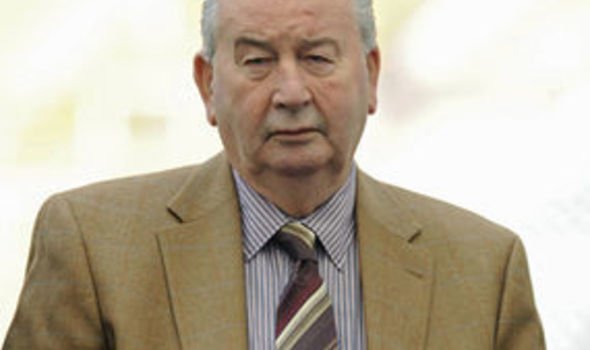
Argentinian ‘Godfather’ Julio Grondona
Thursday June 2,2011

By David Pilditch

SEPP Blatter’s henchman launched an extraordinary attack on England yesterday for daring to take a stand against corruption in world football
Argentina’s Julio Grondona – nicknamed The Godfather – accused FA bosses and British journalists of being “pirates” after exposing the biggest bribery scandal in the history of the game.
The football chief then added that he would never back England to host a World Cup unless it hands back the Falkland Islands.
His astonishing outburst came as discredited Blatter, 75, was re-elected Fifa president after a farcical secret ballot in Zurich.
In a tortuous process which took nearly two hours, delegates cast their votes for Blatter – the only candidate in the election.
Before the vote Blatter said: “I am the captain weathering the storm, this is a difficult period for Fifa and I admit that readily. Not only is the pyramid shaking but our ship has drawn some water.
“We must do something because I do not want ever again that we face this undignified situation.”
ì
I am disappointed that the election happened but now the focus must be on where Fifa goes from here
î
Sports minister Hugh Robertson
The result showed that 203 out of 208 members voted, with Blatter securing 186 votes.
He was handed a giant bouquet of flowers as he entered the auditorium to a fanfare and applause before declaring: “We will put Fifa’s ship back on the right course in clear, transparent waters.”
Blatter, who has run Fifa since 1998, added: “Something marvellous has happened today.
“I thank you for your trust and confidence and together we will have four more years, provided the Lord gives me the life, energy and strength to continue on our path.
“I’m happy today we were once again able to bring solidarity and unity into Fifa.” Earlier, a move by the FA to postpone the election, backed by Prince William and Prime Minister David Cameron, ended in heavy defeat – and led to a series of stinging attacks.
SEARCH UK NEWS for:
Grondona, Fifa’s senior vice-president, took to the podium to present a report from the organisation’s finance committee.
But instead he angrily told the Congress: “We always have attacks from England which are mostly lies with the support of journalism which is more busy lying than telling the truth. This upsets and disturbs the Fifa family.
“I see it at every Congress. It looks like England is always complaining, so please, I say, will you leave the Fifa family alone, and when you speak, speak with truth.”
In an interview with a German press agency, Grondona revealed the reason he had dismissed out of hand England’s bid to land the 2018 World Cup last December.
He said: “With the English bid I said: ‘Let us be brief. If you give back the Falkland Islands, which belong to us, you will get my vote’. They then became sad and left.”
Leaders of associations from Haiti, the Congo DRC, Benin, Fiji and Cyprus all spoke out against the FA’s move. One senior delegate branded England’s bid to halt the election “a disgrace”.
Blatter stood unchallenged after Qatar’s Mohamed Bin Hammam pulled out of the race at the weekend hours before being suspended by Fifa over bribe allegations.
Fifa vice-president Jack Warner, from Trinidad, was also suspended pending a full investigation.
FA chairman David Bernstein called for the election to be postponed in the wake of the scandal.
He said: “We are faced with an unsatisfactory situation. We are subject to universal criticism from governments, sponsors, media and the wider world.
“A coronation without an opponent provides a flawed mandate.”
Blatter yesterday admitted mistakes had been made. Among a series of reforms he announced a new system of choosing World Cup hosts, with all 208 Fifa nations voting instead of the 24-man executive committee.
Last night Mr Cameron’s official spokesman said: “We believe that Fifa should have suspended the presidential election until the investigations which are under way have been completed.
“The most important thing is that the public have confidence in Fifa and, in order for that to happen, we need Fifa to reform.”
Sports minister Hugh Robertson said: “I am disappointed that the election happened but now the focus must be on where Fifa goes from here. It’s crucial that Sepp Blatter delivers on reform that has been promised.
“The organisation’s reputation is at an all-time low and it must become much more transparent for the good of the game. Blatter says the ‘football family’ will get Fifa’s house in order and I hope the FA will play a key part.”


Read more: http://www.express.co.uk/posts/view/250253/Argentinian-Fifa-boss-blasts-lying-English-pirates-Argentinian-Fifa-boss-blasts-lying-English-pirates-#ixzz1O5UDkLAV